Brushing usually gets most of the attention when children are learning how to care for their teeth. Flossing matters too, especially once neighboring teeth begin touching.
So when should parents add flossing to the routine?
A good rule is to start when your child has two teeth that touch each other. At that point, a toothbrush may not be able to clean the surfaces between those teeth effectively.
At what age do children usually need to start flossing?
There is no single age that applies to every child because teeth come in and shift at different times.
For many children, teeth begin touching somewhere between ages 2 and 6. The important thing to watch is not the birthday, but whether neighboring teeth have enough contact that a toothbrush can no longer clean between them.
Once that happens, flossing can help remove plaque and food from those spaces.
Should young children floss by themselves?
Usually not at first.
Young children often do not have the hand coordination needed to guide floss carefully between each tooth. Many children still need a parent to do most or all of the flossing until roughly ages 8 to 10.
Even after a child starts flossing independently, it can help to check their technique from time to time.
The goal is not simply for them to hold the floss. They need to be able to clean between the teeth consistently without rushing through the areas that are harder to reach.
What if my child does not like flossing?
That is fairly common when flossing is new.
Working between small teeth can feel awkward, and some children are not immediately comfortable with the sensation. Building the habit gradually can be easier than expecting perfect technique right away.
Try making flossing part of the same routine each day, such as before bedtime. When it becomes an expected step after brushing, there is less room for negotiation or forgetting.
Consistency matters more than making every attempt perfect from the beginning.
Are floss picks easier for children?
They can be.
Traditional string floss works well, but it is not always easy for a parent to maneuver inside a small mouth. Floss picks may be simpler to hold and can make the process more manageable.
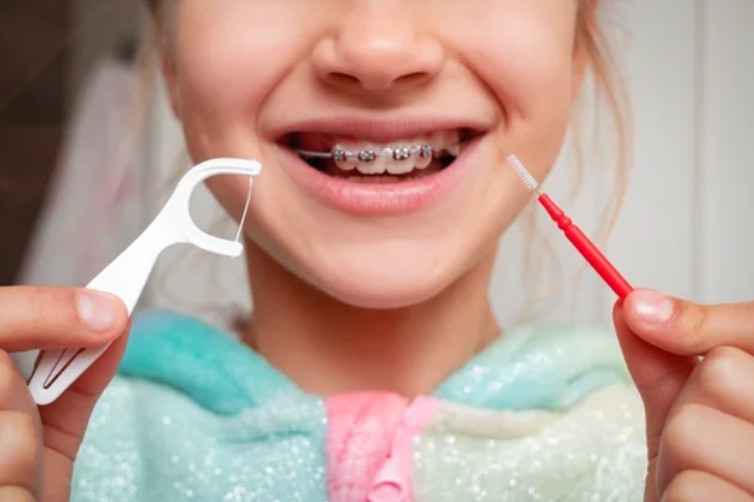
Water flossers may also be useful for some older children, including those who have braces or areas that are difficult to reach.
The best option is the one that allows the spaces between the teeth to be cleaned regularly and effectively. If you are not sure which tool makes sense for your child, your dentist can show you different options.
Why does my child's gum bleed when flossing?
A small amount of bleeding can sometimes happen when a child is first getting used to flossing, particularly when plaque has been collecting along the gums.
Regular cleaning may help the gums become healthier and less prone to bleeding over time.
However, bleeding should not simply be ignored if it continues. If your child's gums frequently bleed, look swollen, or seem uncomfortable, bring it up during a dental visit so the area can be examined.
Why is flossing important for children's teeth?
The areas between teeth can be easy to miss.
A toothbrush cleans the visible and accessible surfaces of a tooth, but it cannot always reach tightly between neighboring teeth. Plaque left in these spaces can contribute to cavities that may be difficult for parents to spot at home.
Starting flossing when teeth first touch helps clean those areas before problems develop.
It also gives children time to grow up with flossing as part of normal oral care rather than something they are expected to suddenly learn later.
Along with daily brushing and flossing, regular family dentistry visits allow your dentist to monitor how your child's teeth are developing and identify areas that may need extra attention.
How can I make flossing easier for my child?
Keep the routine simple.
Floss once a day, help your child as much as needed, and use a flossing tool that you can handle comfortably. It may take some trial and error before the process becomes quick and familiar.
Parents can also use regular dental visits to ask about technique. A dentist or hygienist can demonstrate how to clean between your child's teeth and point out areas where plaque tends to collect.
If dental visits themselves are difficult for your child, you may also find our article on what to do when your child is nervous about the dentist helpful.
Start when the teeth start touching
Children do not need to wait until they are old enough to floss by themselves.
Once two teeth touch, it is time to begin cleaning between them. Parents will usually need to handle the job in the early years and gradually hand over more responsibility as their child's coordination improves.
A few extra minutes each day can help protect the spaces a toothbrush cannot reach while giving your child a routine they can carry into adulthood.
If you are unsure whether your child should be flossing yet or want help with technique, Dental Care of Lucas can walk you through it at their next visit.