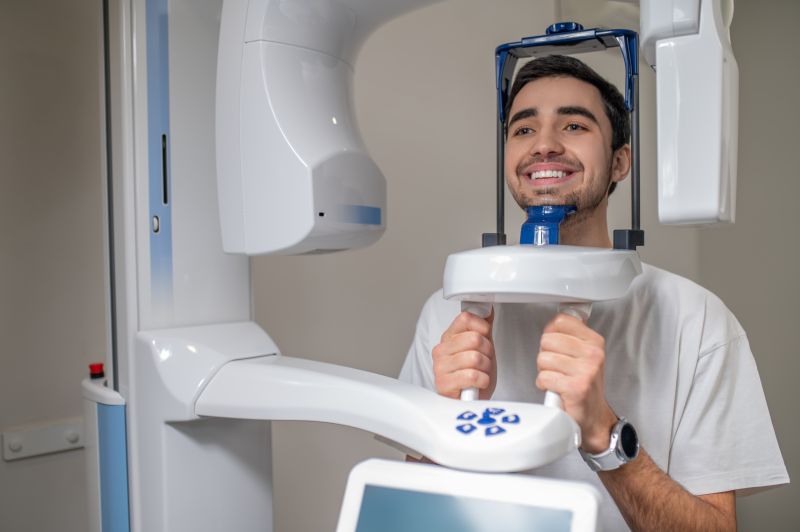
If your teeth feel fine, being told it is time for X-rays can feel a little unnecessary.
That is a fair question. A lot of patients wonder the same thing, especially if they are not having pain, sensitivity, swelling, or anything obvious going on.
The honest answer is this: dental X-rays are not always needed every single year for every person. But they are needed regularly. How often depends on your mouth, your dental history, and what your dentist is watching.
Why Dentists Use Dental X-Rays
A dental exam can show us a lot, but not everything.
There are spots we simply cannot see by looking in your mouth, even with a mirror and good lighting. The areas between teeth, under the gums, around tooth roots, and beneath older fillings or crowns can hide problems for a while.
That is where X-rays help. They give your dentist a clearer view of what is happening below the surface.
For patients coming in for routine visits, X-rays are often part of family dentistry, but they should still be based on the person in the chair. A teenager with new cavities every visit is different from an adult who has gone years without dental issues. Different mouths need different timing.
What Dental X-Rays Can Show
X-rays are not just for finding cavities, though that is a big part of it.
They can help show:
- Small cavities between teeth
- Infections near the root of a tooth
- Bone loss related to gum disease
- Impacted teeth
- Problems forming under crowns or old fillings
- Changes in the jawbone or surrounding structures
Some of these issues do not hurt at first. That can be the tricky part. It is one reason we tell patients that nothing hurting does not always mean nothing is wrong.
A small cavity between two teeth may feel like nothing. An infection near a root may stay quiet for a while. Bone loss can happen slowly enough that a person does not notice it day to day, which is also why gum health matters even when your teeth feel fine.
Finding those things early usually gives you more options. Often, the fix is simpler too.
So, Do You Need X-Rays Every Year?
Not always.
Some patients do need yearly imaging, or even more frequent images in certain situations. That is more likely if you have had a lot of cavities, active gum disease, several crowns or fillings, root canal treatment, or a pattern of dental problems that needs closer monitoring.
Other patients may not need X-rays as often. If your teeth and gums have been stable for years, your dentist may be comfortable spacing them out.
The key is risk. Dentists are not supposed to take X-rays just because a calendar says so. They should be looking at your history, your current exam, your symptoms, your age, and what has changed since your last visit.
What About Radiation?
This is probably the biggest concern people have, and it is understandable. Nobody wants unnecessary radiation.
The good news is that dental X-rays use a very low amount of radiation, especially with digital sensors. The exposure is small, and for most patients, the benefit of finding a problem early is greater than the risk from the image itself.
Still, “low” does not mean “take them for no reason.”
Dentists follow a principle called ALARA, which stands for “As Low As Reasonably Achievable.” In plain English, it means we use as little radiation as we can while still getting the information needed to take care of you safely.
That might mean fewer images. It might mean waiting longer between sets. It might also mean taking X-rays when something new shows up, like pain, swelling, a cracked tooth, or a suspicious area around an old filling.
X-Rays Also Help Track Changes Over Time
One thing patients do not always see is the comparison side of X-rays.
A single image is useful. A series of images over time can be even more helpful.
Your dentist can compare current X-rays with older ones and look for small changes. Maybe a spot between two teeth has grown. Maybe the bone level around a tooth has shifted. Maybe an old crown still looks fine on the outside, but the image shows something starting underneath it.
That kind of tracking matters. It helps your dentist avoid guessing.
It also helps prevent over-treatment. If something has not changed and is not causing trouble, your dentist may be able to keep watching it instead of jumping straight into treatment.
What If You Are Not Sure Why X-Rays Are Being Recommended?
Ask.
A good dental team should be able to explain it in normal language. Not a lecture. Not a rushed answer while someone is already putting the sensor in your mouth.
You can ask things like:
“What are you looking for with these X-rays?”
“Has something changed since my last visit?”
“Do I need these today, or can they wait?”
“How often do you recommend them for me?”
Those are reasonable questions.
At Dental Care of Lucas, that conversation is part of the visit. The goal is not to take images just to check a box. It is to understand what is happening with your teeth and gums, then decide what actually makes sense from there.
The Bottom Line on Dental X-Rays
Dental X-rays are less about routine and more about prevention.
They help catch problems that are easy to miss during a visual exam, especially in tight spaces or under existing dental work. They can also help your dentist keep an eye on changes over time, which is useful when something is small, quiet, or not ready for treatment yet.
So no, not everyone needs dental X-rays every year.
But most people do need them at regular intervals, and the right timing depends on the person. If you are due for a checkup or wondering whether X-rays make sense for you, Dental Care of Lucas can talk through it with you during your visit.
Have Questions About Dental X-Rays?
If you are unsure whether you need X-rays at your next visit, just ask. We are happy to explain what we are looking for and why it matters before moving forward.